So what are you going to do this summer?
...languish....
Based on a positively true story of my encounter with a young poet.
Wednesday, June 19, 2013


Sunday, January 20, 2013
Carpool Conversations
One of Chongo's friends -- the very talented artist one -- said, "CHS (Competitive High School) has taken so much and given me so little."
"What do you mean by that?"
"Well, I guess it's taught me to think more critically, but it's taken so much of my time. I could have been out exploring the world."
When he puts it that way, my heart agrees with him.
Although I trust and deeply hope, that CHS actually prepares students to explore and engage the world, my fear is that conforming to the world is valued too highly. Because at the end of the day artistic talent, witty observations and some deep thinking about life doesn't pay the bills or get you into too many colleges.
"What do you mean by that?"
"Well, I guess it's taught me to think more critically, but it's taken so much of my time. I could have been out exploring the world."
When he puts it that way, my heart agrees with him.
Although I trust and deeply hope, that CHS actually prepares students to explore and engage the world, my fear is that conforming to the world is valued too highly. Because at the end of the day artistic talent, witty observations and some deep thinking about life doesn't pay the bills or get you into too many colleges.
Wednesday, June 27, 2012
Shoes
When Chongo was young, he had a problem remembering his
shoes. It’s one of the pitfalls of living in California, I guess – the weather
only occasionally being cold enough to make a kid consider his feet.
One day we missed a movie when barefoot boy was discovered
and we had to go back home. Occasional we’d stop at Target to buy a pair of flip
flops. I finally made him pay for them from his own allowance.
“How can you forget your shoes?” I would ask. But I knew the
answer. When you are battling mythical beasts with only a sword or flying
through space avoiding asteroids by a hairsbreath, shoes seem insignificant.
At one point I grew tired of reminding him to put his shoes
on for school, and put a yellow post it on the door to remind him. There were
days I saw him walk up to it and read it with surprise, “oh, right! Shoes.”
Eventually we outgrew the sticky note, the frustrating trips
with our shoeless boy. The teenager doesn’t need reminders; ratty converse
sneakers hang daily at the end of his long legs. But I miss that boy who had no
room in his brain to remember his shoes. And I have to ask: What did he have to
forget in order to remember his shoes?
Wednesday, June 6, 2012
Distracted driving
Just this week I narrowly missed an accident when I failed to yield at the stop sign.
I was distracted. By the Kangaroo paws. They were in such riotous bloom -- deep red and velvety with a touch of yellow, glowing in the late afternoon sun. I couldn't take my eyes off of them.
A couple days later I had to hit the brakes too hard to avoid hitting the car in front of me.
Again, I was distracted. This young couple were walking up the sidewalk. They were holding hands and laughing. They just looked so happy I couldn't take my eyes off of them.
Then it was the moon. So fat and luminous floating just above the rooftops. I had to force myself to look away to keep my car on the road.
Who needs cell phones for distraction when we're surrounded by so much love and beauty?
I was distracted. By the Kangaroo paws. They were in such riotous bloom -- deep red and velvety with a touch of yellow, glowing in the late afternoon sun. I couldn't take my eyes off of them.
A couple days later I had to hit the brakes too hard to avoid hitting the car in front of me.
Again, I was distracted. This young couple were walking up the sidewalk. They were holding hands and laughing. They just looked so happy I couldn't take my eyes off of them.
Then it was the moon. So fat and luminous floating just above the rooftops. I had to force myself to look away to keep my car on the road.
Who needs cell phones for distraction when we're surrounded by so much love and beauty?
Wednesday, May 30, 2012
Worry
I was sitting at my desk, working. So much to do but suddenly feeling capable, like everything was going to work out. Until this nagging worry came back to twist my stomach.
And I thought to myself, "I know I have something to worry about, but I can't remember what it is."
And then my head itched and I remembered I had been exposed to lice.
I hate lice. I know from personal experience what a bother they are. When I was a kid I got treated for lice every time I came back from the jungle. My mom would mix vaseline and kerosene together and rub it through my hair. You had to wear it all morning before you could wash it out, and you stank. I've had it with my own kids and the thought of dealing with those little critters stresses me out.
Still, I thought it was ridiculous to be worried about something so apparently unremarkable that a person could forget.
I thought of the friend I'd run into the day before. I hadn't seen her in awhile and she told me, "I've been dealing with the whole breast cancer thing."
Thinking of her I felt very happy that my worry was simply about the possibility of lice.
Of course today, I've been overly grateful that the itching appears to have been psychosomatic.
And I thought to myself, "I know I have something to worry about, but I can't remember what it is."
And then my head itched and I remembered I had been exposed to lice.
I hate lice. I know from personal experience what a bother they are. When I was a kid I got treated for lice every time I came back from the jungle. My mom would mix vaseline and kerosene together and rub it through my hair. You had to wear it all morning before you could wash it out, and you stank. I've had it with my own kids and the thought of dealing with those little critters stresses me out.
Still, I thought it was ridiculous to be worried about something so apparently unremarkable that a person could forget.
I thought of the friend I'd run into the day before. I hadn't seen her in awhile and she told me, "I've been dealing with the whole breast cancer thing."
Thinking of her I felt very happy that my worry was simply about the possibility of lice.
Of course today, I've been overly grateful that the itching appears to have been psychosomatic.
Saturday, March 17, 2012
Social Niceties
Today you waited.
You waited after all the carpool clowns had climbed out of the car and started up the street, ignoring my goodbyes.
I turned to the open car door and there you stood, looking at me expectantly.
"Have a good day," I said, knowing that I love yous are not so welcomed in public.
You gave me a slight smile, and a nod. Acknowledging me acknowledging you. Then you turned and walked to school.
It made me happy, remembering that one moment you had turned back, waiting just to say goodbye. To acknowledge I was there. I've given you speeches about the importance of social niceties to make people feel valued. But they are just speeches. Today I knew in my heart what that really means. Thank you.
You waited after all the carpool clowns had climbed out of the car and started up the street, ignoring my goodbyes.
I turned to the open car door and there you stood, looking at me expectantly.
"Have a good day," I said, knowing that I love yous are not so welcomed in public.
You gave me a slight smile, and a nod. Acknowledging me acknowledging you. Then you turned and walked to school.
It made me happy, remembering that one moment you had turned back, waiting just to say goodbye. To acknowledge I was there. I've given you speeches about the importance of social niceties to make people feel valued. But they are just speeches. Today I knew in my heart what that really means. Thank you.
Thursday, March 8, 2012
Lemon Cake

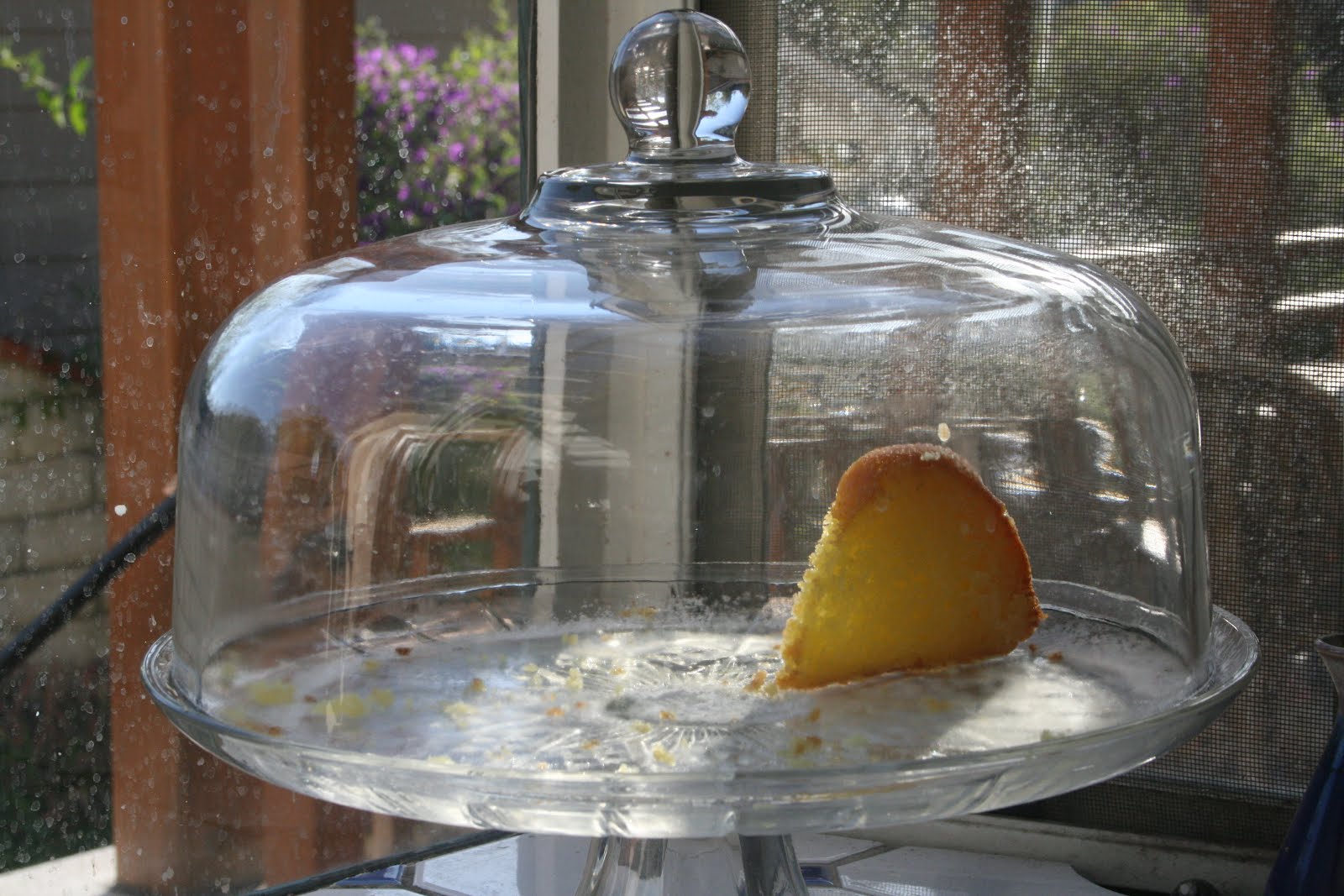
This is the last piece of lemon cake.
I made it a week ago for friends, put it on a cake plate and displayed it dusted with powdered sugar. We ate pieces drizzled with lemon glaze and berries and cream and coffee. It was a happy evening. Only half a cake was left at the end.
It sat, under the glass dome all week, slowly piece by piece slivered away. Maia and I ate it while we planned a mystery dinner she wants to do with her grandmother, while we watched “Smash,” while I obsessed over the best prices for our family vacation.
All week it’s made me happy looking at that lemon cake, so yellow, so elegant, so tasty. Yes, I am one of those. Food makes me happy. Not in large quantities, but in succulent servings. Flavor enjoyed in suspended moments of pleasure.
The sight of a lemon cake waiting, drenched, soaking in the sweet tanginess of lemon glaze -- how could I not be happy?

The last piece of lemon cake. I ate it today.
Subscribe to:
Posts (Atom)